Elbow replacement surgery is a specialized procedure designed to alleviate pain and restore function in patients with severe elbow joint arthritis or injury. By replacing the damaged joint with a prosthetic implant, this surgery enhances mobility and reduces discomfort, offering a long-term solution for those suffering from limited elbow function, thereby improving overall quality of life.
Here’s how it works:
Initial Evaluation:
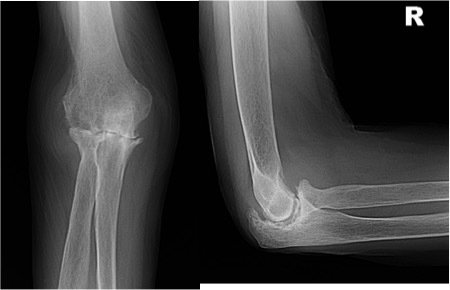
The doctor assesses the condition of the elbow, often through physical exams and imaging tests like X-rays or MRIs, to determine the extent of damage (e.g., arthritis, fractures, or other conditions).
Pre-Surgery Planning:
The surgeon discusses the surgery, potential risks, and recovery process with the patient. A customized treatment plan is developed based on the patient’s condition.
Anesthesia:
The patient is given general anesthesia (puts them to sleep) or regional anesthesia (numbs the arm) to ensure they feel no pain during the procedure.
Incision:
A small incision is made at the back of the elbow to access the joint.
Removal of Damaged Parts:
The surgeon removes the damaged or arthritic parts of the elbow joint, including the ends of the humerus (upper arm bone) and the ulna (forearm bone).
Implantation of the Prosthesis:
A prosthetic joint is inserted, which typically consists of metal and plastic components designed to replace the natural bone. The prosthesis includes:
A metal part for the humerus (upper arm).
A metal component for the ulna (forearm).
A plastic spacer between the two to allow smooth movement.
Repositioning and Securing the Implant:
The implant components are securely attached to the bones, often using special cement or mechanical fittings to ensure they stay in place.
Closure:
Once the prosthesis is properly positioned and functioning, the surgeon closes the incision with sutures.
Post-Surgery Care:
The patient is monitored for any complications, and pain management is provided. The elbow may be immobilized with a sling or brace for a short period.
Rehabilitation:
After the surgery, physical therapy is crucial for restoring strength, mobility, and function in the elbow. Exercises help the patient regain range of motion and improve overall function.
Recovery:
Recovery time varies but generally takes several months. Patients gradually resume normal activities with the guidance of their healthcare provider.
Common Conditions Leading to Bone Tumor Surgery :
Osteoarthritis
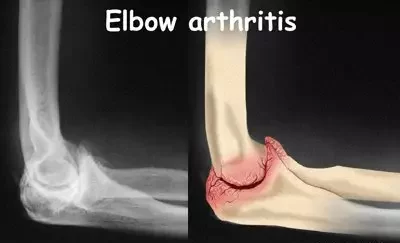
The degeneration of cartilage in the elbow joint, causing pain, stiffness, and limited range of motion. This is often due to aging, wear and tear, or previous joint injuries.
Rheumatoid Arthritis
An autoimmune condition that leads to inflammation and damage to the joint, causing pain, deformity, and loss of function in the elbow.
Post-Traumatic Arthritis
This form of arthritis develops after a severe elbow fracture or injury, leading to joint deterioration over time and significant pain or dysfunction.
Elbow Fractures
Severe fractures of the elbow joint that cannot be properly healed through traditional methods may require replacement if the bone or cartilage is too damaged